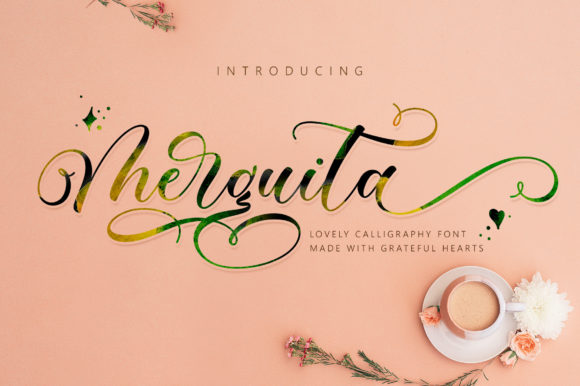
Merguita Script: The Handwritten Font That Feels Both Timeless and Fresh
There's something undeniably magnetic about a font that bridges two worlds—the elegance of traditional calligraphy and the relaxed energy of modern design. Merguita Script does exactly that. It's the kind of typeface that makes you pause mid-scroll, whether you encounter it on a wedding invitation, a boutique coffee label, or an Instagram carousel promoting a new product launch. It carries personality without trying too hard, and that balance is surprisingly rare in the world of premium fonts.
For designers, entrepreneurs, and anyone who cares deeply about how their visual identity communicates, finding a script font that doesn't feel dated or overly whimsical can be a challenge. Too many handwritten fonts lean into one extreme: either they look like they belong on a greeting card from 2005 or they sacrifice legibility for artistic flair. Merguita Script threads the needle. Its letterforms have a natural flow, with subtle swashes and ligatures that add sophistication without overwhelming the message. The strokes feel intentional—like someone with genuine penmanship skill sat down and crafted each character with care.
Why the Details Matter More Than You Think
What sets Merguita Script apart from hundreds of other script fonts available in design marketplaces is its thoughtful construction. The font maintains its calligraphic roots while incorporating contemporary proportions and spacing. That means it doesn't just look beautiful in isolation on a mood board—it actually works in real projects where clarity and aesthetic appeal need to coexist.
One of the most practical features worth highlighting is its PUA encoding. If you've ever purchased a decorative font only to discover that accessing the alternate characters required special software or complicated workarounds, you know how frustrating that experience can be. Merguita Script eliminates that problem entirely. Every glyph, swash, and stylistic alternate is accessible directly through standard character maps, making it straightforward to customize your typography regardless of the application you're using. Whether you're working in Adobe Illustrator, Canva, Procreate, or even a basic word processor, the full range of characters is at your fingertips.
This accessibility matters because those extra characters—the stylistic alternates, the contextual swashes, the ligatures—are what allow you to fine-tune a headline or logo wordmark until it feels just right. A single alternate letterform can transform the rhythm of an entire word. Having those options readily available turns a good font into a genuinely versatile design asset.
Where Merguita Script Truly Shines in Practice
Let's talk about real-world applications, because a font's value isn't measured by how pretty it looks in a specimen sheet. It's measured by how well it serves actual projects.
Brand Identity and Logo Design: If you're building a brand for a boutique business—a florist, a skincare line, a photography studio, a specialty bakery—a script font like Merguita Script can become the cornerstone of your visual identity. It communicates warmth, craftsmanship, and attention to detail. Paired with a clean sans serif for body text, it creates a typographic hierarchy that feels polished and intentional. The key is using it strategically. Reserve it for your primary wordmark or tagline rather than stretching it across every piece of collateral. Scarcity creates impact.
Packaging Design: On product labels and packaging, handwritten fonts create an immediate emotional connection. They suggest that a real person made this product, that care went into every detail. Merguita Script works beautifully on everything from candle labels to artisan food packaging to cosmetic containers. Its contemporary feel keeps it from looking too rustic, which is important if your brand aesthetic leans modern or minimalist.
Social Media and Digital Content: For content creators and marketers, typography plays a massive role in whether someone stops scrolling or keeps moving. Merguita Script brings personality to quote graphics, promotional announcements, story templates, and carousel covers. It photographs well, which matters more than people realize—fonts that look crisp on a retina display but muddy on a phone screen defeat the purpose of visual content entirely.
Wedding and Event Stationery: Invitations, save-the-dates, programs, menus, signage—the wedding and event industry relies heavily on script fonts, and Merguita Script fits naturally into that space. Its balanced letter spacing means it reproduces well across different print sizes, from large-format welcome signs to small envelope addressing.
Editorial and Web Design: Bloggers and publishers can use it for pull quotes, section headers, or featured article titles to add visual interest without sacrificing the reading experience. On websites, it pairs exceptionally well with geometric sans serifs or classic serifs, creating contrast that guides the eye and establishes visual rhythm.
Pairing Fonts Without Overthinking It
Font pairing is one of those design skills that feels mysterious until you understand the basic principle: contrast creates harmony. Since Merguita Script is a flowing, organic script, it benefits from being paired with something structured and understated. Think of fonts like Montserrat, Lato, Open Sans, or even a refined serif like Playfair Display for a more editorial feel. The script handles the emotion and personality; its partner handles the information and readability.
A practical exercise: set your headline in Merguita Script, then set your body copy in two or three different sans serif options. Read the combination out loud—yes, actually read it. Your eye will tell you which pairing feels balanced and which feels like two strangers standing next to each other at a party. Trust that instinct. Good typography feels effortless when it's working, and slightly off when it isn't.
Also pay attention to weight and size. Merguita Script works best at medium to large sizes where its details can breathe. At very small sizes, even the most legible script fonts can become difficult to read, especially on screens. Use it for display purposes—headlines, titles, short phrases—and let a more utilitarian font handle paragraphs and fine print.
Practical Considerations Before You Commit
Before integrating any font into a brand system or commercial project, a few considerations deserve your attention. First, review the full character set. Merguita Script includes alternates and swashes that expand its range significantly, so spend time exploring what's included. You might discover a stylistic alternate for a particular letter that perfectly solves a kerning issue or adds the flourish a design needs.
Second, think about consistency across platforms. If you're using the font on a website, in printed materials, and across social media templates, test it in each environment. Rendering differences between browsers, operating systems, and print processes can affect how a script font appears. A few minutes of testing saves hours of revision later.
Third, understand the licensing. Merguita Script is a commercial font, which means its license governs how you can use it. If you're a freelancer creating logos for clients, a small business owner designing your own packaging, or an agency producing marketing materials, make sure the license covers your intended use. Most premium font licenses are straightforward, but it's always worth confirming before a project goes to print or goes live.
Finally, resist the urge to use every stylistic alternate in a single project. The beauty of a font like Merguita Script lies in restraint. One or two carefully chosen swashes can elevate a design. Too many competing flourishes create visual noise. The best designers know that what you leave out matters as much as what you include.
A Font Worth Exploring
Finding a typeface that balances personality with professionalism, tradition with modernity, and beauty with practicality isn't easy. Merguita Script manages to deliver on all of those fronts. Whether you're crafting a brand identity from scratch, refreshing your social media presence, designing product packaging, or putting together stationery for a milestone event, it offers the kind of versatility that makes it a worthwhile addition to any designer's toolkit. Take the time to explore its character set, experiment with pairings, and test it across your specific use cases. You'll quickly understand why it earns a permanent spot in so many creative workflows.